Why Does Your Facility Need a Cleanroom Door?
Why do I need a clean room door for my facility? The answer begins with contamination control. A cleanroom door is not merely an entrance. It helps protect controlled air, regulated pressure, and sensitive processes from uncontrolled surroundings.
When operators open a standard door, pressure can shift quickly. Dust may enter. Cleaning chemicals may spread. Unplanned airflow can disturb particle-sensitive work. A properly designed cleanroom door reduces these risks through tight seals, smooth surfaces, durable hardware, and suitable closing systems. Some models also support interlocking controls, vision panels, and automatic operation.
Cleanroom author William Whyte describes the cleanroom as “a room in which the concentration of airborne particles is controlled.” His statement highlights an important point. The door forms part of that controlled environment. It must work with air-handling systems, personnel procedures, and cleaning routines.
A door alone is not magic. That assumption deserves correction. Poor installation can create gaps beneath the frame. Damaged gaskets can weaken the barrier. Frequent traffic can shorten hardware life. These details matter.
In pharmaceutical, medical, electronics, food, and research facilities, door selection should match the room’s classification and workflow. Teams should review pressure differences, temperature, humidity, washdown exposure, traffic volume, and maintenance access before purchasing.
The best 2026 cleanroom doors are not chosen for appearance alone. They are selected for measurable performance, reliable operation, and long service life. A practical decision protects products, supports workers, and prevents avoidable process disruption. Sometimes, the smallest opening creates the largest contamination risk.
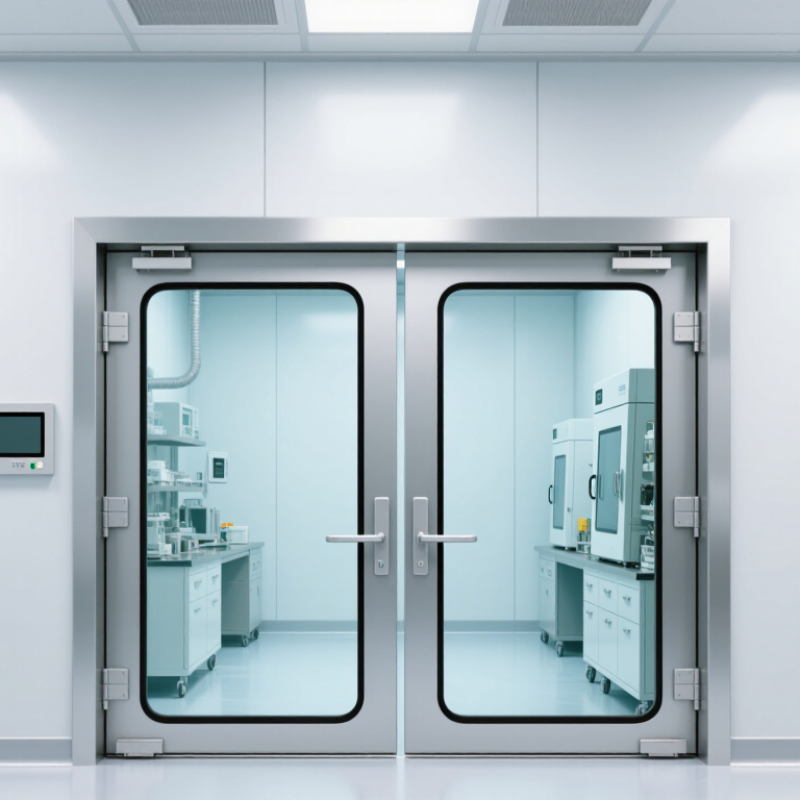
In a controlled facility, a cleanroom door is more than an opening between rooms. It helps protect the airflow boundary and supports stable pressure differences. Its frame, seals, hardware, and surface finish can influence particle movement. When the door closes, it should limit uncontrolled air exchange. Small gaps matter.
ISO 14644-1 classifies cleanrooms by airborne particle concentration. It does not certify a door by itself. This distinction is often missed during facility planning. A suitable door should support the room’s cleanliness strategy, pressure cascade, and cleaning routine. Smooth, non-shedding surfaces are easier to wipe. Tight seals reduce leakage, while reliable closers prevent doors from remaining open.
Practical experience shows that door performance depends on people, not hardware alone. Operators may open two doors together, damage gaskets with carts, or ignore a slow-closing panel. Interlocks and visual indicators can reduce these risks, but they require regular checks. Not perfect. Still useful. Pressure readings, particle monitoring, and smoke visualization can reveal problems that a visual inspection misses. Maintenance teams should record seal wear, hinge alignment, closing speed, and cleaning results. One detail deserves reflection: a technically advanced door may fail if its daily use does not match the room’s contamination-control plan.
ISO 14644-1:2015 sets a strict limit: 3,520 particles per cubic meter at 0.5 micrometers or larger. That number is easy to underestimate. A worker’s sleeve, a cart wheel, or a door gap can disturb the room’s particle balance. Cleanroom doors help control pressure, airflow, and unwanted movement between classified areas.
The 2022 ASHRAE Handbook—HVAC Applications identifies pressure relationships and controlled airflow as essential contamination-control measures. A properly sealed door supports these conditions, especially when paired with interlocks, automatic closing, and smooth, cleanable surfaces. In practice, facilities should verify door performance during certification, not trust specifications alone. Small leakage can become a serious weakness.
A door cannot solve every contamination problem. It is only one part of the control strategy. Operators, maintenance teams, and air-handling systems still influence particle levels. This is where facility planning often needs more reflection. A visually clean door may still have worn seals, poor alignment, or excessive opening time. ISO 14644-3:2019 provides testing guidance for demonstrating controlled conditions, including recovery performance. Regular inspection matters. Details matter more.
2026 Best Cleanroom Doors: Why Does Your Facility Need One?
How Door Design Supports ISO 14644-4 Cleanroom Performance
A cleanroom door is part of the environmental control system, not a decorative barrier. ISO 14644-4:2022 links facility design with airflow, pressure control, and contamination prevention. Door movement can disturb all three. A poorly sealed leaf may leak air around its frame. A slow closer may leave the opening exposed. Small details matter.
ISO 14644-1:2015 permits up to 352,000 particles of ≥0.5 micrometres per cubic metre in an ISO Class 7 room. In an ISO Class 8 room, the limit rises to 3,520,000 particles. That difference shows why door performance must match room classification. Flush panels, sealed vision windows, smooth hinges, and rounded edges reduce particle traps. Interlocked doors also protect pressure cascades. The 2022 EU GMP Annex 1 guidance commonly references a 10 Pa minimum pressure difference between adjacent grades. Door gaps can weaken that pressure quickly.
Commissioning teams should test closing speed, leakage, interlock logic, and recovery after repeated traffic. A door that performs well during acceptance testing may struggle during shift changes. That is the uncomfortable part. Design assumptions can fail in daily use. ISPE Baseline Guide Volume 3 and ASHRAE guidance both support coordinated HVAC and envelope design. However, door selection alone cannot guarantee compliance. Operators, maintenance routines, and traffic discipline remain decisive. Practical observation still matters.
A cleanroom door controls more than access. It helps protect pressure balance, airflow direction, and controlled surfaces. In facility assessments, door performance often depends on opening frequency and operator habits.
Sliding doors Sliding doors usually need less floor clearance. They can suit narrow corridors and busy material routes. However, the panel may remain open longer during heavy traffic. That delay can increase air exchange and disturb pressure stability.
Swing doors Swing doors close quickly when fitted and adjusted correctly. They require a clear arc, which may reduce usable space. Poorly sealed edges can still create noticeable leakage.
Traffic data should guide the decision. Record peak movements, cart widths, door cycles, and average opening time. A doorway handling 200 passages per hour faces different demands from a low-use personnel entry. For critical rooms, compare pressure readings before and after installation. Smoke visualization and leakage checks can reveal problems that drawings miss.
No door type wins every site. That is the practical answer, though it is less convenient.
Tips: Measure the full swing radius, not just the wall opening. Review clearance around carts, gloves, and emergency movement. Specify interlocks where pressure separation requires controlled sequencing. Check seals, closers, sensors, and tracks during routine maintenance. A clean-looking door can still leak. Also, door data may change after staffing or production changes, so reassess it periodically.
2026 Best Cleanroom Doors: Why Does Your Facility Need One?
Key Specs: 12–15 Pa Pressure Differentials and Rapid-Cycle Timing
A cleanroom door must protect pressure control, not merely close an opening. In many controlled environments, a 12–15 Pa differential helps direct airflow from cleaner zones toward less controlled spaces. The exact target depends on room classification, HVAC balance, and process risk. A door with poor sealing can weaken that pressure barrier within seconds.
Watch the gauge.
During routine operation, operators should see stable readings before opening the next interlocked door. Rapid-cycle timing also matters. A practical cycle may range from three to eight seconds, depending on door size, traffic, and safety requirements. Shorter cycles reduce waiting and limit exposure during material transfer. However, excessive speed can create turbulence, noise, or unsafe movement. Fast is not always better.
In a busy facility, the door should include reliable seals, visible status indicators, and controlled interlocking. Sensors must detect incomplete closure, while alarms should identify pressure loss promptly. Maintenance teams should record cycle times and pressure readings during qualification and daily checks. Real conditions are rarely perfect. Cart wheels, worn seals, or a delayed sensor can change performance. That is why periodic testing remains necessary, even after installation. A specification sheet cannot replace observation inside the working room.
Cleanroom doors help maintain pressure cascades and reduce contamination risk. The chart compares common engineering reference points for pressure differentials and rapid-cycle door timing.
A 12–15 Pa differential is commonly used as a cleanroom pressure-design reference. Actual setpoints and cycle times should be confirmed through airflow studies, room classification, safety requirements, and door-system specifications.
It supports airflow direction, pressure balance, and contamination prevention. A leaking frame can weaken room control.
Flush panels, sealed windows, smooth hinges, and rounded edges reduce particle traps. Small surfaces still matter.
Adjacent room grades commonly use a minimum pressure difference of 10 Pa. Door gaps can reduce it quickly.
Sliding doors save floor space and suit narrow corridors. Swing doors can close faster but require a clear opening arc.
Record cart widths, door cycles, peak movements, and average opening time. Two hundred passages hourly create demanding conditions.
Yes. Its panel may stay open longer during busy traffic. That delay increases air exchange.
Test closing speed, leakage, interlock logic, and recovery after repeated openings. Use pressure readings and smoke visualization.
No. Shift changes, operator habits, and maintenance can expose weaknesses. Design assumptions sometimes fail.
Inspect seals, closers, sensors, hinges, and tracks. A clean-looking door can still leak.
Reassess after staffing, traffic, or production changes. Door data does not stay fixed.
A cleanroom door is a critical part of a controlled environment, not simply an entrance. It helps limit airborne particles, maintain stable pressure, and support the performance requirements described by ISO 14644-1 and ISO 14644-4. In an ISO Class 5 area, particle control is especially demanding, with no more than 3,520 particles per cubic meter at or above 0.5 μm. Proper door construction, sealing, and operation help protect these conditions during personnel and material movement.
Why do I need a clean room door for my facility? The answer depends on your need to control contamination, air leakage, traffic flow, and available space. Sliding and swing doors offer different advantages in terms of clearance, movement patterns, and sealing performance. Key considerations include maintaining pressure differentials of approximately 12–15 Pa and selecting rapid-cycle timing that minimizes exposure between rooms. With the right design, a cleanroom door supports consistent environmental control, efficient workflows, and reliable facility performance.

RZ door