Why Choose Pre-Hung or Slab Doors What is the Difference?

Time:2026-05-13 Author:Liam
0%

Choosing the right door can significantly affect your home's aesthetics and functionality. Among the various options, pre-hung and slab doors stand out. Each type offers unique benefits and some challenges. For many homeowners, understanding these differences is crucial. So, what is the difference between pre-hung and slab doors?

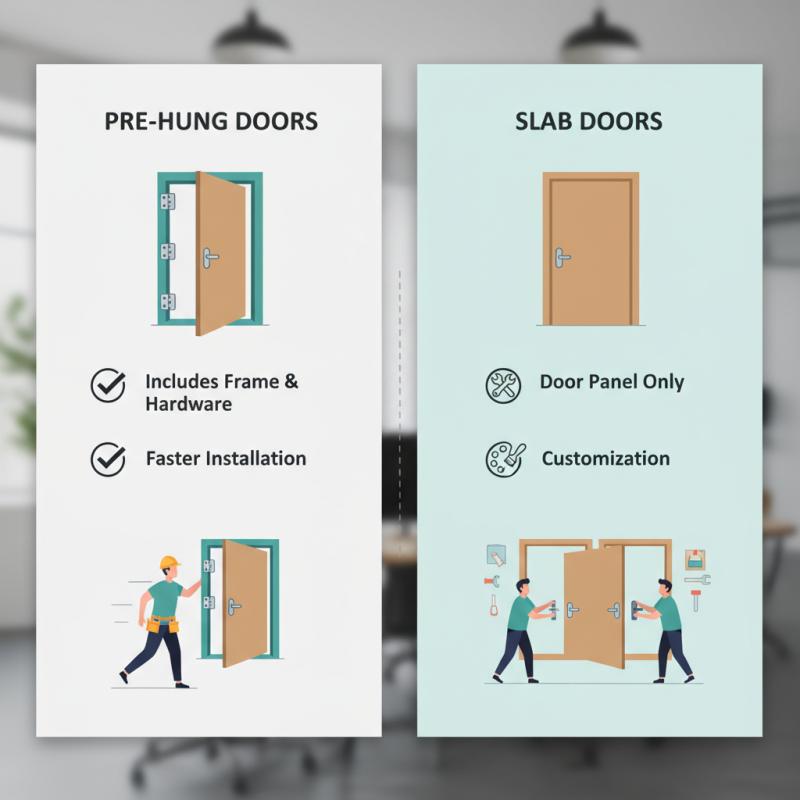
Pre-hung doors come ready to install. They include the frame, hinges, and door. This makes installation faster and often easier. On the other hand, slab doors are just the door itself. They allow for more customization but require a frame and hardware to be functional. This can be a more intricate process, especially for DIY enthusiasts.

Both options have their merits. Pre-hung doors eliminate guesswork and are reliable for quick renovations. However, slab doors might appeal to those wanting a personalized touch. It’s essential to weigh the pros and cons of each type to fit your needs and preferences. Understanding these distinctions can prevent potential headaches during installation or replacement.
Why Choose Pre-Hung or Slab Doors What is the Difference?

Understanding Pre-Hung Doors: Definition and Features

Pre-hung doors are a popular choice for many homeowners. They come as a complete unit, which includes the door, frame, and hinges, all preassembled. This can save significant time during installation. Unlike slab doors, pre-hung options are easier to place and align correctly. For new constructions or renovations, this can make the whole process less stressful.

The features of pre-hung doors are noteworthy. They typically offer better insulation because they fit snugly within the frame. This can improve energy efficiency in your home. However, one downside is that they can be heavier and more expensive than slab doors. Some people may find the installation process daunting, especially if they haven't done it before. It’s important to weigh these factors when choosing the right door for your space. A thorough understanding of both types will help ensure that you make the best decision for your needs.

Exploring Slab Doors: Characteristics and Common Uses

Slab doors are a unique choice for many homeowners. These doors come as a solid panel without any frame. They are often used for interior spaces such as bedrooms, bathrooms, and closets. The simplicity appeals to those who favor a minimalist aesthetic. Slab doors are quite versatile. They can be customized with paint or stain to suit various decor styles.

One notable characteristic of slab doors is their ease of installation. Unlike pre-hung doors, they require fewer steps. However, this means you must have existing frames that are straight and level. If the frames are off, it may lead to issues during installation. Choosing slab doors may seem straightforward, but careful planning is essential.

Common uses include room partitions and storage areas. Many designers appreciate their clean lines. However, it’s important to consider sound insulation. Slab doors may not provide the same level of noise reduction as other options. Overall, slab doors can be an excellent choice, but potential drawbacks should be weighed.

Comparative Analysis: Installation Processes for Pre-Hung vs. Slab Doors

When considering door installation, the choice between pre-hung and slab doors is significant. Pre-hung doors come with a frame and are easier for many homeowners. They are installed as a single unit, which allows for quicker setup. You only need to ensure proper alignment. On the other hand, slab doors require more skill during installation. They come without frames. You have to adjust hinges and possibly cut the door to fit the existing frame.

For those opting for pre-hung doors, ensure that the frame is square and level. Misalignment can lead to future issues, including drafts and noise. With slab doors, precise measurements are vital. A minor mistake can make installation frustrating. This choice requires patience and a good understanding of the current door frame.

When installing either type, using shims is wise. They help ensure doors swing freely without sticking. Another tip is to double-check the door size before purchasing. Sometimes a door appears standard but may not fit perfectly in your home. Given variations in construction, choose wisely to avoid extra work later.

Why Choose Pre-Hung or Slab Doors: What is the Difference?

Feature Pre-Hung Doors Slab Doors
Installation Time Quicker, usually completed in a few hours More time-consuming, may take half a day or more
Assembly Required Comes pre-assembled with frame Requires frame and hardware installation
Cost Higher upfront cost due to frame Lower initial cost
Customization Options Limited to standard sizes & styles More options for size, material, and style
Suitability for DIY Easier for beginners Requires more skill and tools

Cost Considerations: Budgeting for Pre-Hung or Slab Door Options

When considering new doors, the cost influences many decisions. Pre-hung doors often come at a higher price due to their complete frame and included hardware. This can save time on installation, which many homeowners value. Slab doors, however, offer a more budget-friendly choice. They require additional framing and hardware, but this allows for customization.

Despite the initial savings with slab doors, you might face extra costs later. Incorrect measurements or alignment issues during installation can lead to further expenses. Additionally, you might need to hire a professional for a proper fit, which can negate the initial savings.

Inspecting both options carefully can help clarify the true cost. What seems cheaper on the surface may become complex down the line. Remember to account for quality and durability as well, as these factors impact long-term value. Balancing upfront costs with future expenses will ensure a better overall decision.

Durability and Energy Efficiency: Which Door Type Comes Out on Top?

When it comes to choosing between pre-hung and slab doors, durability and energy efficiency are key factors. Pre-hung doors come with a frame, ensuring a tight seal upon installation. This seal can minimize drafts, enhancing energy efficiency. Reduced air leaks lead to lower utility bills. However, the installation process can be more complex. It requires precision and may not suit all DIY enthusiasts.

On the other hand, slab doors offer simplicity. They are just the door panel, making them lighter and easier to handle. However, the efficiency largely depends on the quality of the hardware used. An improperly fitted slab door can leave gaps, reducing insulation and allowing air leakage. While slab doors can be more affordable, the trade-off may be increased energy costs over time.

Both options have their merits. Pre-hung doors shine in energy efficiency, but require expertise for installation. Slab doors are manageable for DIYers but come with potential pitfalls. Evaluating the specific needs of your home will guide you toward the best choice. Each type has its strengths and weaknesses, often leading to a compromise that reflects practical realities.

Comparison of Pre-Hung and Slab Doors: Durability and Energy Efficiency

FAQS

: What are slab doors?

: Slab doors are solid panels without frames, ideal for interior spaces.

Where are slab doors commonly used?

They are often used in bedrooms, bathrooms, and closets.

How easy is it to install slab doors?

Installation is straightforward but requires straight, level existing frames.

Can slab doors be customized?

Yes, they can be painted or stained to match various decor styles.

What is a drawback of slab doors regarding sound?

Slab doors may not provide adequate sound insulation compared to other options.

How do slab doors compare in energy efficiency?

They can be less efficient if not fitted properly, leading to air leaks.

Are pre-hung doors more efficient than slab doors?

Yes, pre-hung doors create a better seal, minimizing drafts and energy costs.

What DIY challenges might arise with slab doors?

Improper installation may lead to gaps, affecting insulation and efficiency.

Is a slab door always a budget-friendly choice?

While slab doors may be cheaper initially, they could increase energy costs over time.

What should be considered before choosing slab doors?

Weigh ease of installation against potential durability and insulation issues.

Conclusion

When considering new doors for your home, it's essential to understand what is the difference between pre-hung and slab doors. Pre-hung doors come as a complete unit, including the frame, which simplifies installation and offers better insulation and structural integrity. On the other hand, slab doors are simply the door itself without a frame, allowing for greater customization and adaptability in various openings.

Installation processes vary significantly between the two; pre-hung doors generally involve a more straightforward installation due to their ready-to-hang nature, while slab doors may require additional work to ensure proper fitting. Cost-wise, pre-hung doors can be more expensive upfront, but they may save money in the long run through improved energy efficiency and durability. Ultimately, choosing the right door type will depend on your specific needs, budget, and design preferences.

Liam

Liam

Liam is a dedicated marketing professional with a profound expertise in the industry, where he excels at highlighting the unique advantages of our core products. With a keen understanding of market trends and consumer needs, Liam frequently updates our company’s professional blog, providing......