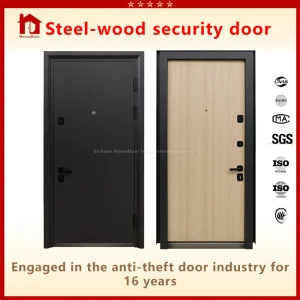
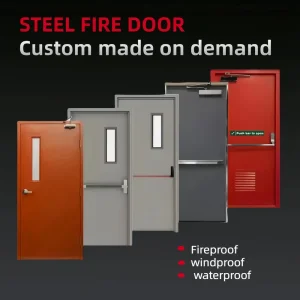
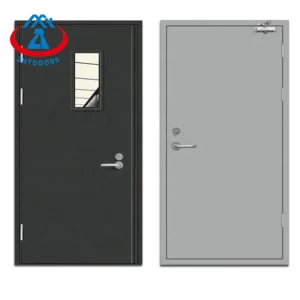
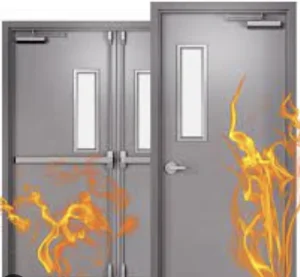
Specially adapted structural doors designed to resist heavy fire and marine corrosion conditions typical of coastal Equatorial Guinea.
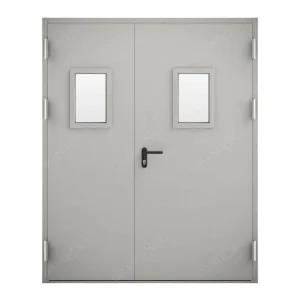
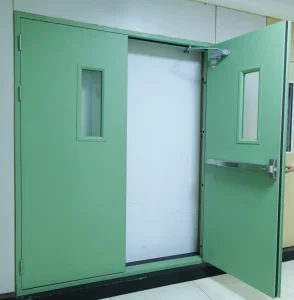
Equatorial Guinea is currently undergoing structural shifts driven by both the energy sector and economic diversification plans. As key cities like Malabo and Bata expand their administrative, residential, and logistics footprints, the requirement for robust fire safety infrastructure has escalated. Oil and gas platforms around Bioko Island and Punta Europa demand structural components that can withstand extreme heat and prevent fire propagation.
Additionally, modern tourist hubs, government compounds in Ciudad de la Paz, and logistics facilities within the Luba Free Port require highly reliable passive fire protection. In the local construction environment, where high temperatures and saline air are persistent factors, importing substandard doors inevitably leads to rust, structural warping, and hardware failure. Standard wood and light-gauge metals simply fail under high-humidity coastal settings, positioning premium steel fire-rated doors as the baseline standard for secure construction.
Our structural doors undergo rigorous independent certifications to guarantee compliance with international safety protocols.
Engineered for high-hazard commercial settings. Positive pressure test methodologies verify the door's capacity to maintain seal integrity, preventing the passage of lethal combustion gases during critical evacuation windows.
Adhering to European fire safety regulations (widely used in Equatorial Guinea's governmental and hospitality infrastructure projects). We provide thermal insulation indices to limit physical transmission of radiant heat.
Galvanized steel substrates combined with premium powder coat finishes provide high resistance to saline moisture and heavy tropical downpours. Essential for long-term operational viability in Bata and Malabo.
Integrating over two decades of metallurgical precision to manufacture and export dependable fire containment solutions.
Jiangsu RZ Door Co., Ltd. & Yongkang Jiahua Electronic and Mechanical Co., Ltd. represent over 22 years of production excellence in structural openings. As high-volume manufacturers and export specialists, we meet the distinct safety mandates of international distribution, heavy construction, and maritime infrastructure.
Our catalog features high-end luxury cast aluminum doors, German-style Class A security steel doors, solid wooden doors, melamine wooden doors, and eco-friendly WPC doors, allowing our clients to procure diverse door classifications under unified logistics. Backed by a 15,000-square-meter modern production facility, we execute both custom projects (ODM) and large-scale standard architectural runs (OEM) with rapid turnaround times.
We operate under strict quality management processes certified by ISO9001. All fire-rated steel assemblies undergo destructive testing under real fire simulation scenarios to ensure zero failure at the time of critical demand.
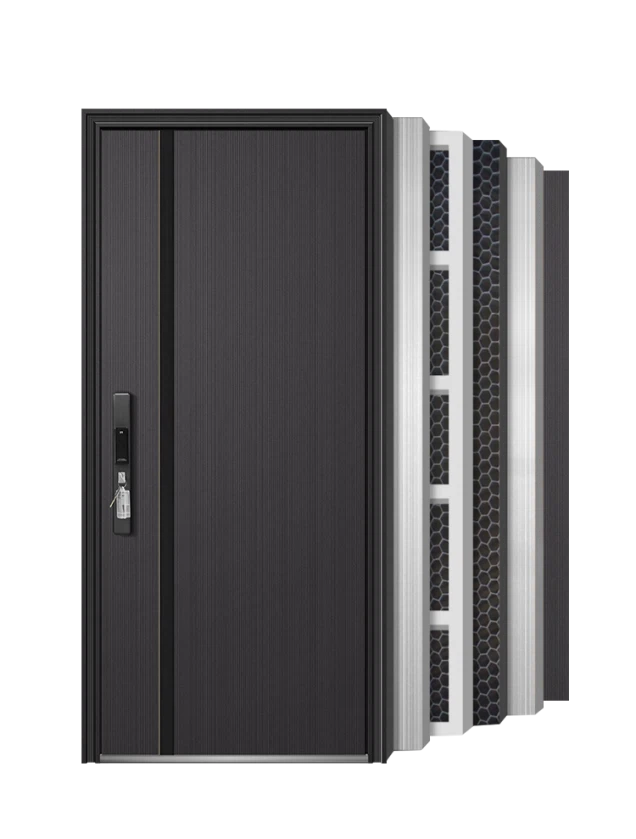
Understanding the internal material dynamics that prevent structural failure at 1000°C.
We use mineral wool cores (minimum density of 120kg/m³) or pressurized perlite boards. This core maintains low heat transfer rates, keeping the unexposed side of the door cool enough to prevent nearby combustibles from auto-igniting.
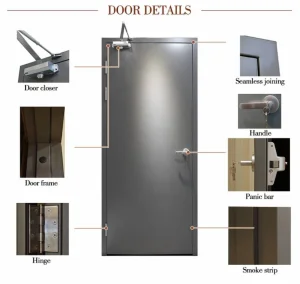
Embedded around the frame perimeter, these seals expand up to 25 times their original thickness when temperatures reach 150°C. This forms a smoke-tight barrier that stops toxic fumes and oxygen flow to the fire source.
Panic bars, heavy-duty hinges, and dual-point locks are manufactured from grade 304 or 316 stainless steel. This prevents door warping under intense heat, ensuring evacuation paths can be opened even after prolonged exposure to flames.
Constructed with cold-rolled galvanized steel sheet skins (thickness ranges from 1.0mm to 1.8mm depending on rating requirements), preventing structural sagging or early failure during high-intensity thermal exposure.
Providing architectural doors optimized for specific local economic projects.
Punta Europa and Luba offshore supply bases require Class H (hydrocarbon rated) and heavy duty UL certified door assemblies to protect control rooms and administrative structures from potential explosive incidents.
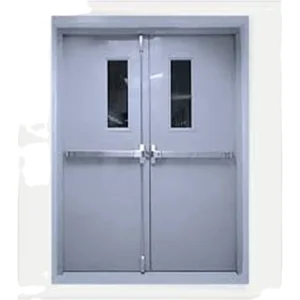
Hotels, malls, and supermarkets in Malabo and Bata require multi-hour fire exits with panic bar systems that blend clean architectural styling with reliable public safety compliance.
Hospitals and government complexes require high acoustic performance along with standard fire-rated containment to maintain comfortable, secure indoor environments.
Adapting to smart city initiatives and environmental standards for the next generation of building safety.
As the construction industry shifts toward smart buildings and lower carbon footprints, fire-rated door design is evolving. Our research focuses on integrating real-time monitoring sensors directly into the door frames. These sensors feed data back to building management systems, notifying facility managers if a fire door is left open, has been tampered with, or experiences unusual stress.
We are also replacing traditional phenolic adhesives with bio-based alternatives to reduce VOC emissions, ensuring our steel assemblies meet LEED and BREEAM green building standards. This aligns with the long-term vision of sustainable, green developments currently planned throughout Central Africa.
Answering technical, regulatory, and logistics questions for contractors and procurement managers in Equatorial Guinea.
Explore our full line of commercial, residential, and industrial doors certified for global export.
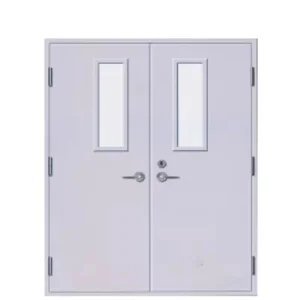
Whether you are designing a commercial development in Bata, a hotel complex in Malabo, or an offshore industrial platform, our engineering department will provide complete compliance documentation and customized quotes.
 RZ door