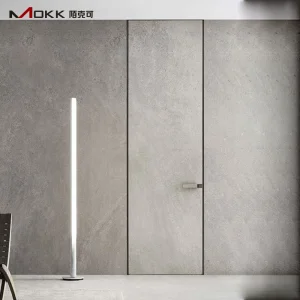
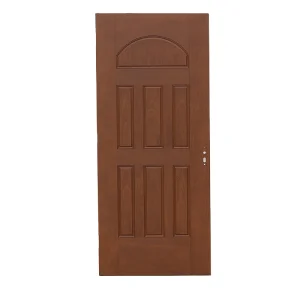
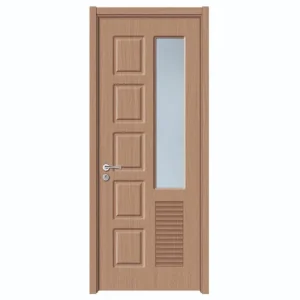
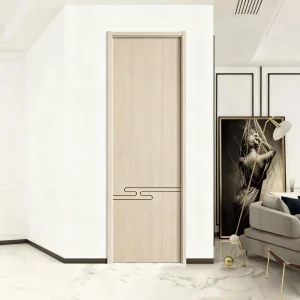
The manufacturing alliance between Jiangsu RZ Door Co., Ltd. and Yongkang Jiahua Electronic and Mechanical Co., Ltd. represents the pinnacle of engineering, security innovation, and structural durability in the global entry door sector. With over 22 years of continuous industrial experience, our combined expertise supplies complex architectural layouts across residential, commercial, and high-security industrial installations.
Operating a cutting-edge 15,000 square meter facility, we integrate structural engineering, materials science, and state-of-the-art automation. This allows us to offer versatile production options, serving both major global distribution networks (OEM) and custom architectural blueprints (ODM). Our commitment to building high-integrity entryways has made us a trusted supplier for developers, contractors, and building material importers in 56+ countries.
Our collaborative production portfolio spans high-performance architectural materials, designed to meet rigorous standards for thermal efficiency, acoustics, and physical security:
Designed for luxury estates and exposed coastal climates, these doors offer exceptional resistance to oxidization and impact.
Reinforced with multi-point locking systems and precise tolerances to meet the highest break-in resistance standards.
Engineered for high-traffic interior and exterior layouts, providing excellent dimensional stability and reliable sound attenuation.
Understanding why China’s entry door manufacturers lead the global market in scale, custom fabrication, and performance-to-cost ratio.
Our production facilities in Jiangsu and Yongkang sit within the world's most advanced hardware and metallurgical manufacturing clusters. Every component—from raw cold-rolled steel coils, architectural-grade aluminum extrusions, and high-density mineral wool insulation, to smart biometric locking cylinders—is sourced locally. This proximity minimizes transport overheads, keeps lead times predictable, and ensures secure supply lines for large orders.
By investing in CNC laser cutting, automated panel bending, robot-assisted spot welding, and continuous electrostatic powder-coating lines, we reduce human error. This automation ensures tight tolerances (within ±0.5mm), making sure that frame-to-leaf fit, weather stripping, and structural alignments match architectural specifications exactly.
China's refined manufacturing processes allow us to offer advanced specifications—such as heavy-duty adjustable 3D hinges, double-glazed tempered low-E safety glass, and multi-point hook locks—at prices that are highly competitive internationally. This allows project managers to upgrade security and thermal specifications without exceeding their budgets.
Unlike rigid western assembly operations, our facilities are built for custom production. We easily accommodate variations in frame depths, custom architectural glass styles, tailored wall interfaces, and custom colors (RAL system), allowing developers to preserve their unique design intent.
True security is built from the inside out. Our German-Style Class A and architectural entry doors feature multi-layered structures engineered to resist physical intrusion, reduce thermal bridging, and block external noise.
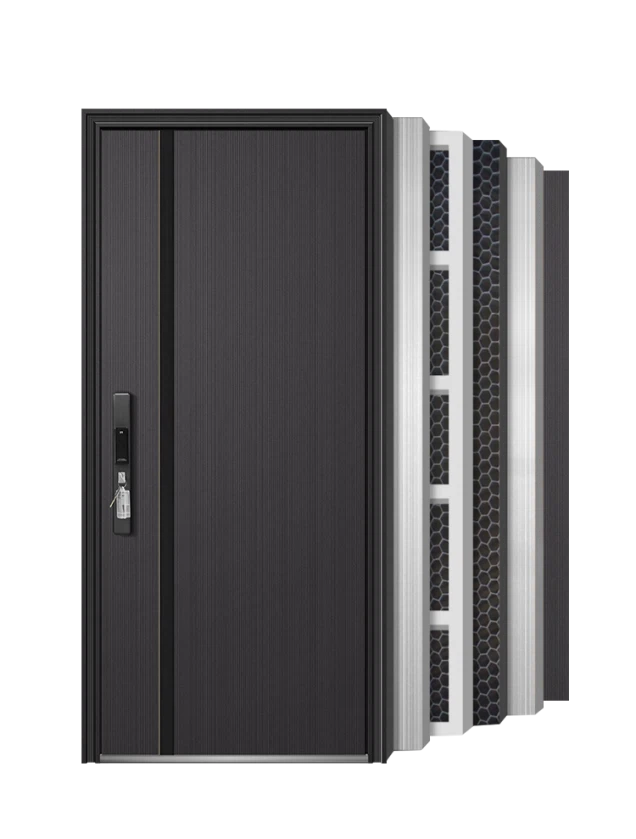
Figure 1: Cross-Sectional Blueprint of Our Multi-Chamber Security Glass & Frame profile.
We use high-density rock wool (flame-retardant and highly soundproof) or polyurethane foam to optimize thermal insulation and block external noise.
High-elasticity EPDM rubber gaskets are integrated into the frame rebates to ensure a tight seal against wind, water, and draft infiltration.
Heavy-duty steel deadbolts engage directly into the reinforced steel frame, preventing intruders from forcing the door off its hinges.
Engineered using cold-rolled steel profiles with built-in anchor points, designed to handle large-format pivot or double-leaf door setups.
Our ISO9001-certified production lines subject every batch of materials to strict structural tests, ensuring they comply with BS 476, EN 1627, and UL fire-rating standards.
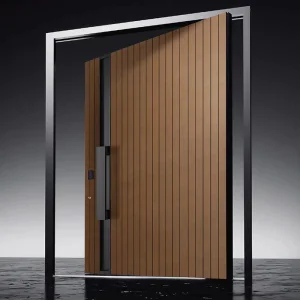
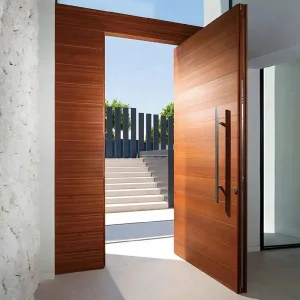
Architects worldwide are moving away from traditional door hinges. Modern luxury homes and commercial lobbies now favor oversized pivot doors. Utilizing heavy-duty hydraulic bottom pivots, these massive units rotate smoothly on a single point. This design distributes weight evenly and accommodates widths of up to 2.5 meters and heights of up to 4 meters.
B2B buyers are increasingly specifying doors pre-wired for smart locking systems. This includes biometric fingerprint readers, facial recognition modules, RFID transponders, and smart home systems. Our R&D division has developed concealed conduit pathways within the door frame to protect low-voltage cables and secure connection hubs.
Due to stricter global energy codes, standard steel or aluminum doors are no longer sufficient. High-end aluminum profiles now feature polyamide thermal barriers. These thermal breaks separate the interior and exterior metal profiles, preventing condensation and lowering heating and cooling costs.
For high-moisture tropical areas or high-traffic interior spaces, WPC doors are becoming the preferred option. By combining wood fiber with recycled polymers, WPC provides the appearance of real wood while offering total resistance to humidity, termites, and rotting.
We design, build, and ship complete custom door packages tailored to the unique regulatory, climate, and structural needs of diverse B2B environments.
We supply developers with high-volume, cost-efficient exterior doors that combine modern aesthetics with reliable security. Options range from clean, flush melamine wood finishes to durable entryways with multi-point locks.
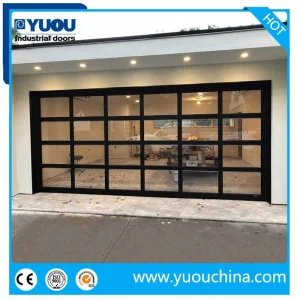
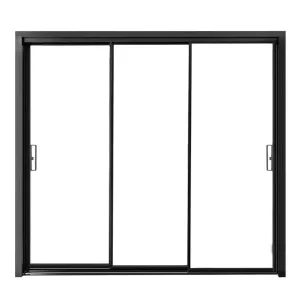
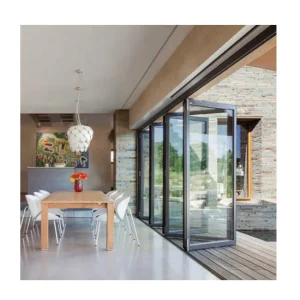
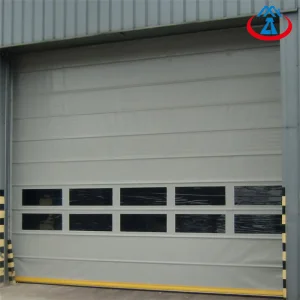
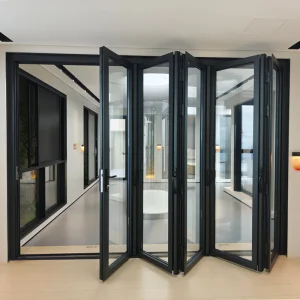
Our double-glazed frameless sliding systems, robust bi-fold partitions, and heavy-duty aluminum garage doors are engineered for high-traffic environments, providing maximum visibility, easy access, and long-term durability.
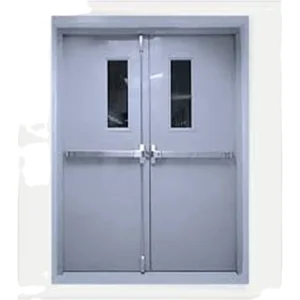
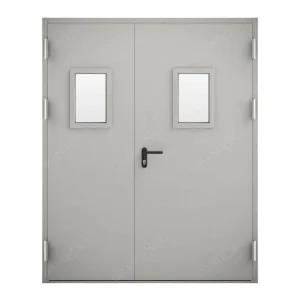
We offer UL and BS-certified fire-rated doors (rated up to 90 and 120 minutes) alongside high-security steel systems. These are ideal for emergency exit pathways, utility rooms, storage complexes, and high-security zones.
For commercial importers, distributors, and developers, purchasing structural components from China requires a clear understanding of compliance, raw material standards, and logistics. Below is our recommended B2B checklist:
Ensure the manufacturer provides full testing reports. For commercial projects in the US, look for UL 10C (positive pressure fire tests) or SDI (Steel Door Institute) standards. For UK and European projects, confirm compliance with BS 476 or EN 1634. All products manufactured by Jiangsu RZ Door and Yongkang Jiahua undergo regular testing by recognized third-party agencies to ensure compliance with global markets.
When importing steel entry systems, clarify the gauge of both the door leaf and the frame. Heavy-duty commercial doors require a 16-gauge (1.5mm) or 14-gauge (2.0mm) frame, paired with an 18-gauge (1.2mm) leaf sheet. Avoid ungalvanized cold-rolled steel in humid or coastal areas; specify galvanized steel or architectural-grade aluminum alloys to prevent rust.
Exterior doors exposed to direct sunlight and weather need high-grade coatings. We offer PVDF (polyvinylidene fluoride) liquid paint coatings or high-durability thermosetting powder coatings. These protect the door against UV fading, chalking, and salt spray corrosion.
Entry doors are heavy and fragile items. We use reinforced corner protectors, high-density foam wrapping, and sturdy wood-crate palletizing to prevent transit damage. Our logistics team organizes container loading patterns to maximize space, helping B2B buyers lower their per-unit shipping costs.
For standard sizes and specifications, the production cycle ranges from 25 to 30 days. For custom ODM products—such as complex cast-aluminum designs, custom structural steel framing, or custom-patterned wood veneers—production takes between 35 and 45 days. This allows time for engineering sign-offs, color matching, and final testing.
Our fire-rated steel and timber doors are tested by international certification bodies. We design and build products to meet BS 476 Part 22 (British Standards) and UL 10B/10C (US Standards). We provide fire resistance ratings of 30, 60, 90, and 120 minutes. Each door is shipped with the corresponding test reports and certification labels.
Yes. For coastal or humid areas, we recommend our cast aluminum doors, FRP (Fiberglass Reinforced Polyester) doors, or steel doors pre-treated with hot-dip galvanization and finished with a PVDF coating. These materials prevent rust and stand up well to moisture and UV exposure.
To keep production efficient, our standard MOQ is 20 units per order. However, we understand that custom architectural projects may require fewer units. We support smaller quantities for custom-engineered pivot doors or complex commercial designs, depending on the specifications.
Yes. Our in-house engineering team provides complete 2D CAD shop drawings and 3D mockups for client approval before production begins. This ensures all dimensions, hardware pre-preps, swing directions, and frame anchors align with the on-site architectural plans.
We can prepare the doors for locks from major brands (such as Assa Abloy, Dormakaba, or Samsung) or install our own tested biometric locking systems. The door panels are constructed with internal wire channels and reinforced lockboxes, ensuring clean, hidden, and secure wiring.
Our high-end thermally broken aluminum and insulated steel doors achieve U-values as low as 1.2 to 1.6 W/m²K, depending on the frame thickness and glass type. We fill the core with high-density polyurethane and use double or triple-glazed Low-E glass to minimize heat transfer.
We offer a 5-year structural warranty on all steel and aluminum frames, and a 2-year warranty on surface finishes and mechanical hardware (such as locks, handles, and hinges). In the rare event of a component failure during the warranty period, we supply replacement parts promptly to minimize project delays.
 RZ door